
Sea sponge care
How to choose, use and care for a natural sea sponge
Everything we tell customers at the counter, in one place: which sponge is right for you, how to clean it, how long it lasts, and what never to do.
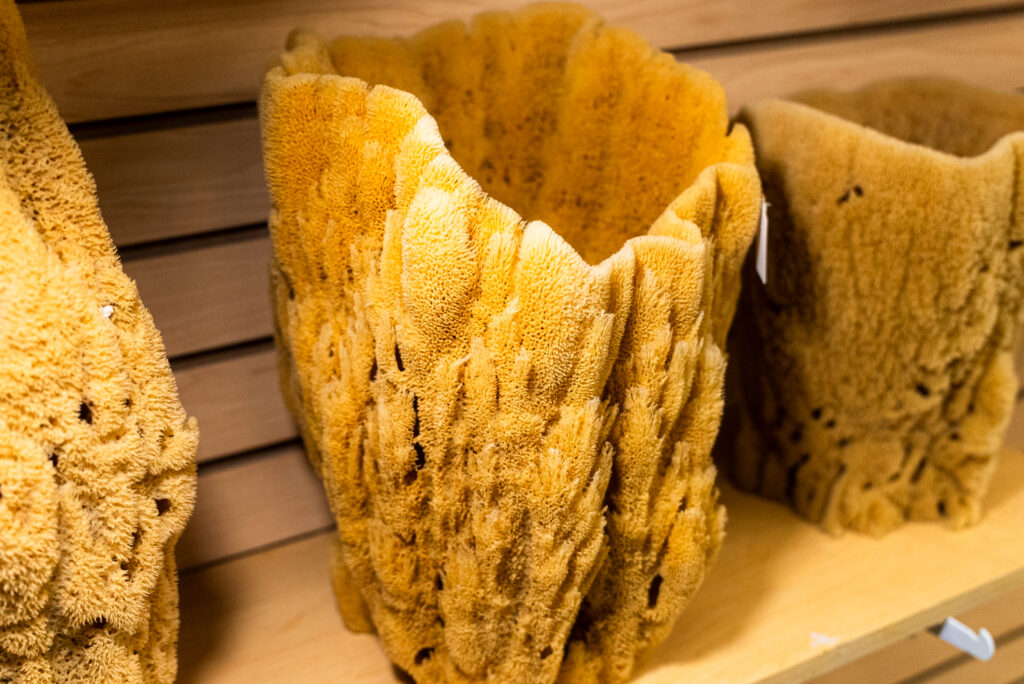
Which sponge is which?
The soft, dense, honey-colored sponge most people picture. Holds the most lather and lasts the longest, which is why it costs the most. Our best seller for the bath and shower.
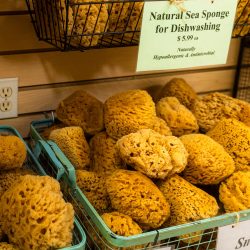
Lighter and a touch firmer than wool, with a gentle scrub. A good everyday sponge and the one we recommend for kids.

Small, very fine sponges for the face, for babies, and for applying creams or makeup. Sold as facial sponges and mini sponges.
Every day: rinse, squeeze, hang
- Rinse thoroughly after each use until the water runs clear of soap.
- Squeeze, don’t wring. Twisting tears the fibers; press it between your palms instead.
- Let it dry in the open air on a hook or a soap rest where air moves around it. A sponge left in a puddle on the tub edge wears out months early.
Every week or two, soak it for 15 minutes in a tablespoon of baking soda in a cup of warm water (or a quarter cup of white vinegar in warm water if it has started to smell), rinse and dry.
- No bleach. Chlorine dissolves the sponge fibers within days.
- No microwave, dryer, dishwasher or boiling water. Heat makes the fibers brittle.
- No wringing or twisting. Squeeze only.
- Don’t store it wet in a closed container or travel bag. Let it dry first.
Sea sponge questions
How long does a natural sea sponge last?
With basic care a wool sea sponge lasts one to two years of daily use; yellow and grass sponges usually last six months to a year. Replace it when it starts to tear or no longer springs back after a squeeze.
How do I clean a sea sponge?
Rinse it well after every use and let it dry in the open air. Every week or two, soak it for 15 minutes in one tablespoon of baking soda in a cup of warm water, then rinse and dry. Never use bleach or heat.
Are sea sponges sanitary?
Yes, kept properly — and it is easy. Rinse it until the water runs clear, squeeze it flat rather than wringing it, and let it dry in the open air. A sponge that dries between uses stays fresh; one left sitting in a puddle will not. Every few weeks, give it a 15-minute soak in one part white vinegar to four parts cool water and it will stay lovely for months.
Are natural sea sponges sustainable?
Sponges are harvested by cutting above the base so the animal regrows, and a properly harvested sponge bed produces for decades. Our family’s sponge tradition comes from Kalymnos, Greece, and continues here on the Gulf coast of Florida.
Why is my new sponge stiff and shedding a little sand?
New sponges arrive dry. Soak yours in warm water for a minute or two and squeeze; it will double in size and soften. A little sand or shell on the first rinse is normal and means it was harvested, not manufactured.
Which sponge is best for the face?
A silk or grass sponge. They are very fine and gentle, and small enough to use with a facial cleanser or to apply creams.
Wool sponge or loofah?
A wool sponge is soft and creates a rich lather; a loofah is a plant fiber with a firmer scrub for exfoliating. Many of our customers use both.
Ready for a new one?
Wool, yellow, silk and grass sponges, loofahs and soap rests, shipped from John’s Pass.