Our ingredients
Why we make soap with goat’s milk and olive oil
Milk has been used as a cleanser and beauty aid for centuries, and olive oil soap is the oldest soap tradition in the Mediterranean. Here is what each one does for your skin and how we make ours.
What goat’s milk does
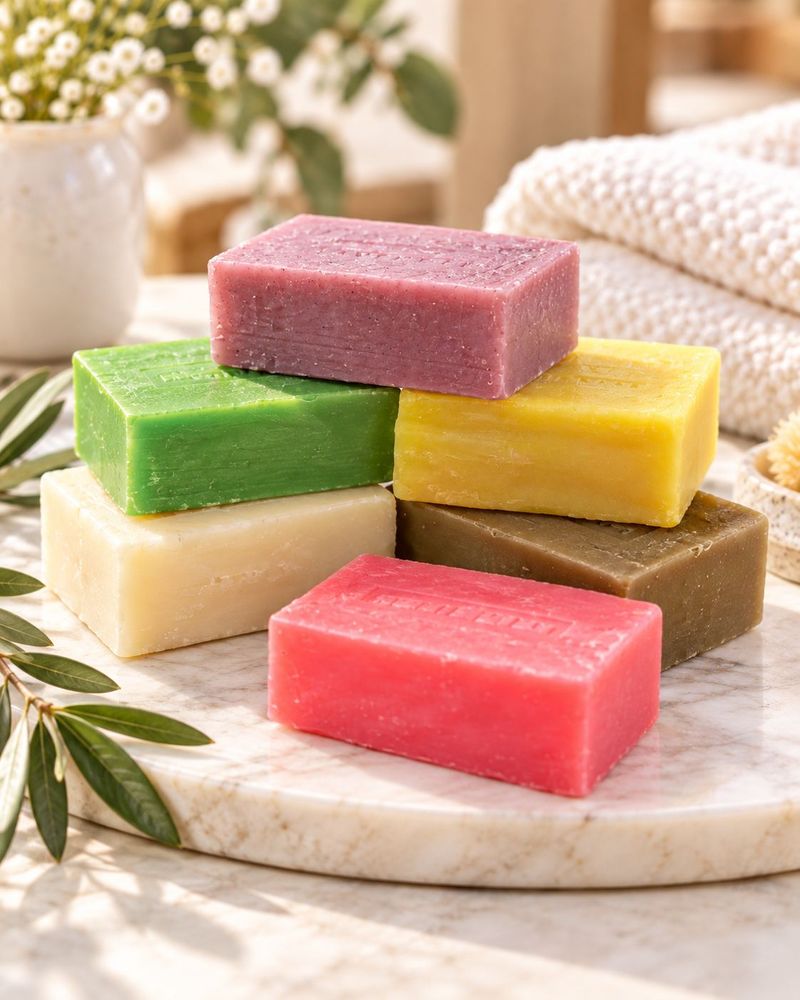
A richer, creamier lather. Goat’s milk goes in where the water would normally go, and it turns a thin, squeaky lather into something soft and dense — closer to whipped cream than to bubbles. You can feel it in the first ten seconds.
It rinses without stripping. Milk is richer than water, and we leave a little extra olive oil in the bar, so your skin doesn’t get that tight, squeaky feeling afterward.
We leave the glycerin in. Making soap creates glycerin naturally, and it’s lovely for skin. Big manufacturers pull it out and sell it separately, then sell you lotion to put it back. Ours stays in the bar.
Our unscented, oatmeal-honey and chamomile bars are the ones we hand people with easily-annoyed skin — a short ingredient list and no added fragrance is what makes the difference. More on that here.
What olive oil does
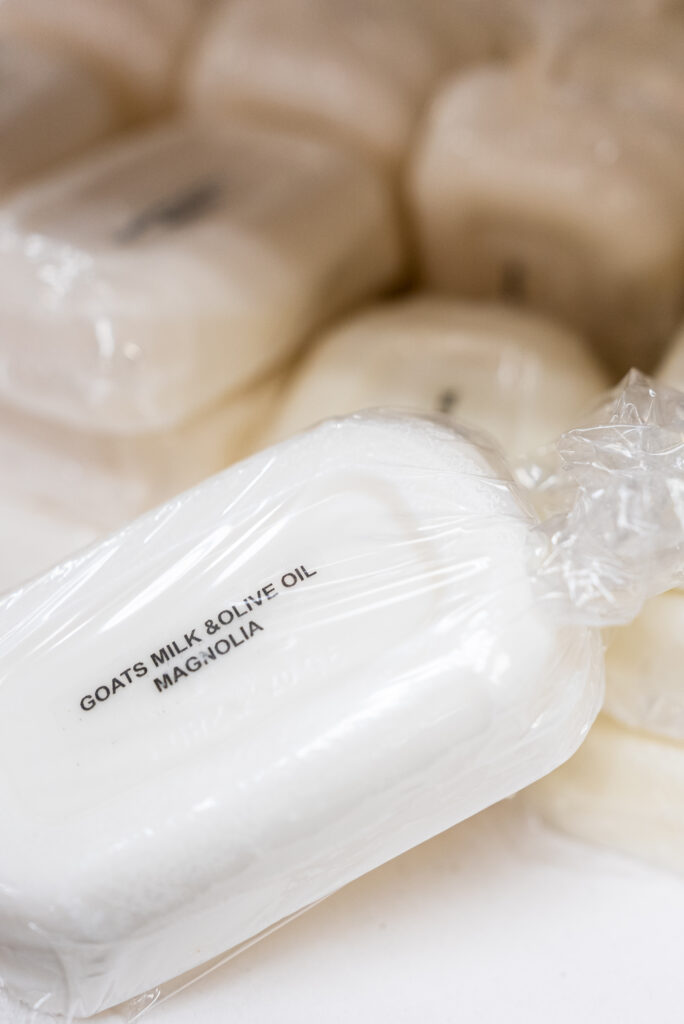
Olive oil soap is the traditional soap of Greece and the wider Mediterranean, and our family has used it for generations. We make ours with extra-virgin olive oil that would be just as good on your kitchen table.
It gives you a low, silky lather rather than big fluffy bubbles, and a bar that feels wonderfully mild — the gentlest one we make. It’s also the patient one: a real olive oil bar wants months on the curing rack before it’s ready, which is exactly why it lasts so well in the shower.
Pair it with a natural sea sponge and you have the same simple routine our family has always used. There’s a fuller comparison of our olive oil and goat’s milk bars here.
How we make it
Our soaps, lotions, scrubs and bath products are made by hand in our own local workshop in small batches.
Simple ingredients
Extra-virgin olive oil, goat’s milk, herbs, mineral salts and botanical oils. No harsh detergents.
Forty-plus scents
From lavender, lemongrass and oatmeal honey to seasonal favorites like Pumpkin Crunch Cake, plus unscented for the most sensitive skin.
Cut and cured by hand
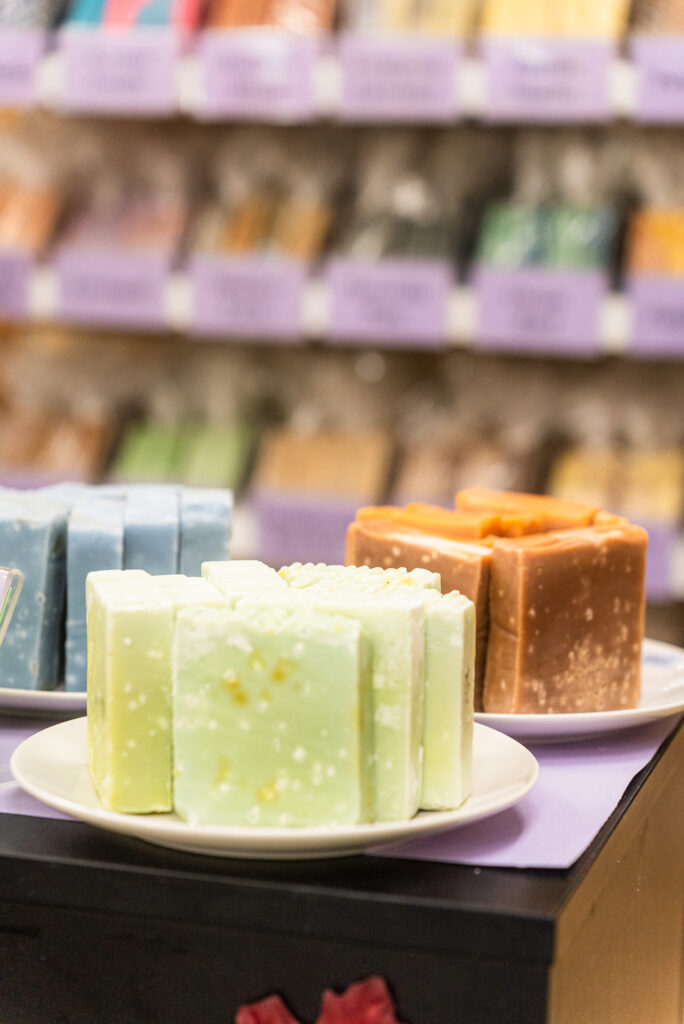
Bars are poured, cut and cured in our workshop, then packed in the shop at John’s Pass or shipped to you.
Goat’s milk soap questions
Is goat’s milk soap good for sensitive skin?
Many customers with dry or easily irritated skin like our unscented and oatmeal-honey bars, and the reason is the short ingredient list and the lack of added fragrance rather than anything the milk does on its own. We would not describe any soap as a treatment. If you have a diagnosed skin condition such as eczema or psoriasis, follow your dermatologist’s advice — and note that if your skin is actively broken, we would steer you to a milk-free bar. Here is our full, honest write-up on that.
Does goat’s milk soap need to be refrigerated?
No. It is a cured bar of soap and keeps for a year or more. Store it somewhere dry between uses on a soap rest so it drains, and it will last longer.
Can I use goat’s milk soap on my face?
Yes. Our facial goat’s milk bars and the milk facial cleanser are made for it, and a silk sea sponge is a gentle way to apply them.
What is the difference between goat’s milk soap and olive oil soap?
Goat’s milk soap lathers more richly and is the more moisturizing of the two; olive oil soap is milder, lower-lather and closest to traditional Greek soap. Both are gentle enough for daily use; many customers keep one of each.
Is your soap made in Florida?
Yes. Our soaps and bath products are made by hand in our own local workshop and sold at our shop in John’s Pass Village, Madeira Beach, and online.
Try a bar
Goat’s milk bars start at $3.75, and we ship nationwide from John’s Pass.