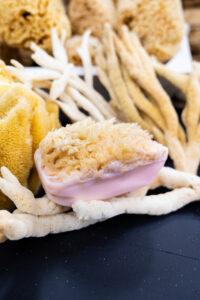
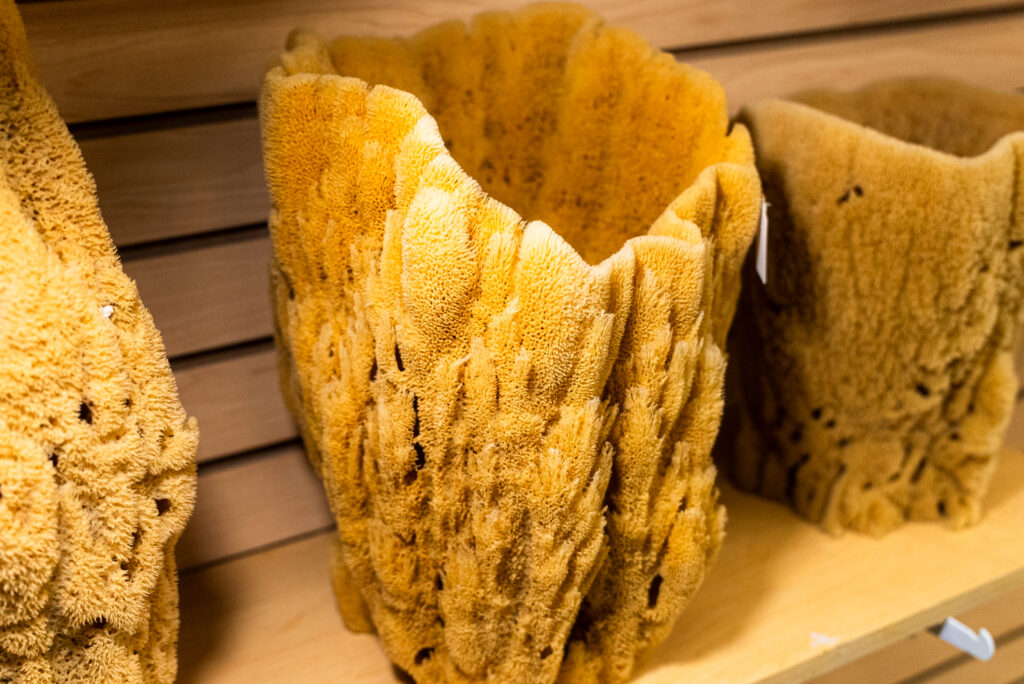
A natural sea sponge is the only thing in your shower that used to be alive. Look after it and the same sponge is still going strong a year from now. Ignore it and it’ll be crusty in two months.
Here’s everything we tell people at the counter, in the order that matters.
After every shower: rinse, squeeze, hang
- Rinse it until the water runs clear. You’re flushing out soap and dead skin, which are what make a sponge stiffen and smell.
- Squeeze, don’t wring. Press it flat between your palms. Twisting tears the fibers, and a torn sponge falls apart fast.
- Hang it somewhere air moves. A sponge that dries between uses almost never smells. One left in a puddle in the corner of the tub will.
That’s genuinely most of the job. Thirty seconds.
Once a month: give it a soak
Every few weeks, depending on how much you use it, pick one of these:
Vinegar — our first choice
One part white vinegar to four parts cool water. Soak 15 minutes, squeeze it through a few times, rinse well. This is the one that fixes a sponge gone crunchy, because it dissolves the soap scum and hard-water minerals doing the damage.
Baking soda
A tablespoon in a bowl of warm water, 15 minutes, rinse. Gentler, and better at killing a smell than at removing buildup.
Hydrogen peroxide
Regular drugstore peroxide, half and half with cool water, ten minutes, rinse very well. Use this one sparingly — every couple of months at most.
Squeeze the water out afterward and let it dry all the way before it goes back in the shower.
What will ruin it
- Boiling water. The fastest way to destroy a sponge. It comes out stiff, shrunken and permanently ruined.
- Bleach. It eats the fibers. If a sponge is bad enough that you’re reaching for bleach, just replace it.
- The washing machine or dishwasher. Heat, detergent and tumbling all at once.
- The microwave. That advice is for kitchen sponges. Don’t do it to this.
- Wringing. Squeeze flat instead.
- Leaving it wet in a closed bag. The one situation where a natural sponge really will go sour.
Where to keep it
Anywhere air gets to it — a hook, a shower caddy with an open bottom, the edge of the tub if your bathroom is well ventilated. Not the shower floor, and not a sealed container. If your bathroom has no window and no fan, bring it out to a towel bar between showers. It makes a real difference.
How long should it last?
With daily use and the care above, six months to a year. Wool sponges sit at the longer end; grass sponges at the shorter one. Weekly use stretches it well past a year.
Retire it when it stops springing back, when bits come away in your hand, or when it’s thinned out enough to tear. Then cut it up and put it in the garden — it’s natural, and it breaks down.
Bringing a stiff sponge back
Nearly every “my sponge went hard” is soap and mineral buildup, not a dead sponge — and it’s fixable. Soak it in the vinegar mix for a full 30 minutes, working it open with your hands every few minutes. Rinse well, then soak in clean cool water for another ten so the fibers relax. Most come most of the way back.
Hard water at home? Do the vinegar soak every two weeks instead of monthly and this stops happening.
Sponges that aren’t in the shower
Car and boat sponges: rinse hard right after, before grit and salt dry inside. And keep the car sponge separate from the bath one, permanently.
Painting sponges: rinse before the paint sets. Dried latex inside the fiber is there for good. Never use solvents on a natural sponge.
Baby sponges: same routine, just be a bit more attentive about drying, and soak every couple of weeks rather than monthly.
Questions we get asked
How often should I clean my sea sponge?
A soak every two to four weeks if you use it daily. If it ever smells, do it that day — and move where you’re storing it, because it isn’t drying properly.
Can I put a sea sponge in the washing machine?
No. Hot water, detergent and agitation together will wreck it. Soak it by hand instead.
Can I boil a sea sponge to sanitize it?
No — boiling permanently stiffens and shrinks it. Use a cool vinegar soak.
Why has my sponge gone hard and scratchy?
Soap scum and hard-water minerals, almost always. A 30-minute soak in one part vinegar to four parts cool water usually brings it right back.
How long does a natural sea sponge last?
Six months to a year with daily use, longer if you only use it now and then.
Are natural sponges better than synthetic ones?
They hold far more lather, they last a lot longer, and they’re not plastic — when a natural sponge finally wears out it composts. That’s the whole case, and it’s a good one.
Can I compost an old sea sponge?
Yes. Cut it into pieces first.
Come pick one out
We cut and sort our sponges by hand at our own warehouse here in Madeira Beach, so if you’re not sure which one suits you, just ask at the counter — it’s a two-minute conversation and it saves you buying the wrong thing.
The difference between wool, yellow and silk sponges · Shop sponges · Find us at John’s Pass