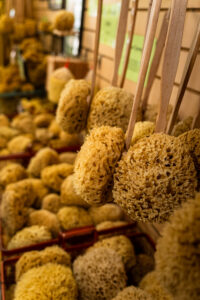
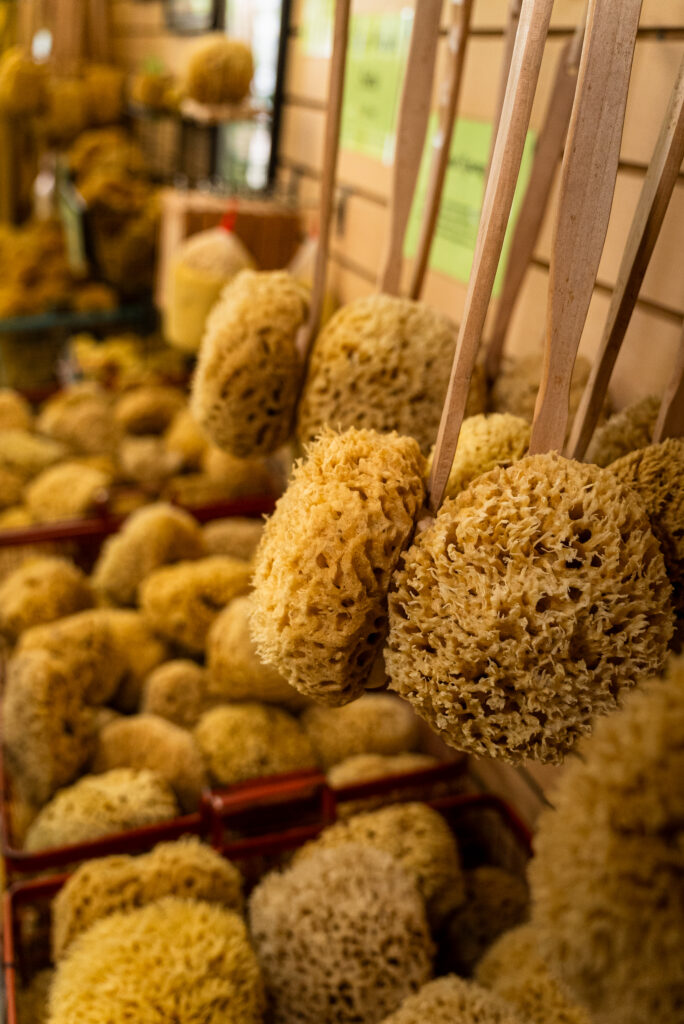
People come in, look at a wall of baskets, and ask a completely fair question: what’s the actual difference? They all look like sponges.
Here’s the plain answer, from a family that’s been cutting and sorting them by hand for a long time.
First — one of these isn’t a sponge at all
A sea sponge is a sea creature. It grows on the sea floor, and what you buy is its soft natural skeleton after it’s been cleaned and cured. That’s why it’s so soft and holds so much water.
A loofah is a gourd. It grows on a vine, like a cucumber, and gets dried out until only the stiff fiber network is left. It has never been anywhere near the ocean.
That’s the whole reason one is soft and thirsty and the other one scrubs.
The five you’ll see in our baskets
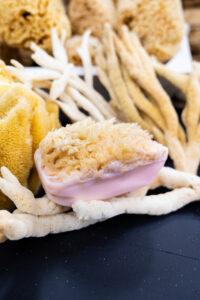
Wool — the one most people should buy
Softest, holds the most lather, lasts the longest. If you’re buying one sponge for your shower, buy wool. It feels lovely, it gets softer the more you use it, and a good one lasts many months. It’s also the priciest, for exactly those reasons.
Around five inches is the size most people want.
Yellow — the practical one
Firmer than wool, with a light scrub to it. Good on your body if you like a bit of texture, and it’s the sponge people grab for around the house — tile, grout, the car. Costs noticeably less than wool, which is why plenty of customers keep wool in the shower and yellow under the sink.
Grass silk — the easy way in
Fine-pored, small, soft and inexpensive. A lovely face sponge, a good guest-bathroom sponge, and the best way to try a natural sponge without spending much.
Mediterranean silk — for your face
The fine one. Smallest, densest pores of anything we carry, which is what gives it that velvety feel. Use it for washing your face, taking off makeup, or putting on toner. Small on purpose — a facial sponge should fit in your palm.
Loofah — when you want a proper scrub
Stiff and scratchy when dry, softer once wet. The right tool if what you want is exfoliation rather than lather. Rinse it well and let it dry fully in the open between uses, and replace it more often than you would a sea sponge.
Quick comparison
| Type | Feel | Best for |
|---|---|---|
| Wool | Softest, most absorbent | Everyday bath and shower, sensitive skin, babies |
| Yellow | Firmer, light scrub | Light exfoliating, household, the car |
| Grass silk | Fine and soft, small | Face, guest bath, a first sponge |
| Mediterranean silk | Velvety, dense | Face washing and makeup removal |
| Loofah | Stiff, scrubby | Back, elbows, heels |
What size?
- 2–3 inches — face, travel, babies
- 4–5 inches — the everyday shower size most people want
- 5–6 inches — our most popular bath size
- 7 inches and up — cars, boats, big jobs
Sponges swell when wet, so the dry one in your hand is smaller than the one you’ll actually use. Between sizes? Go smaller for the face, bigger for the shower.
So which one?
- One sponge, for the shower: wool, 5 inch.
- Sensitive skin or a baby: a small soft wool, 3–4 inch.
- Your face: Mediterranean silk, or grass silk if you want to spend less.
- You want a scrub: yellow for light, loofah for serious.
- Just trying it out: grass silk, or a mini facial sponge for under two dollars.
- The car or the boat: a big wool or yellow, 7 inch or more.
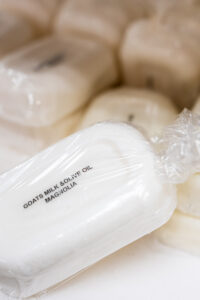
- A gift: a wool sponge and a goat’s milk bar together. Our most-given pair.
Questions we get asked
What’s the softest sea sponge?
Wool. It’s the softest and the most absorbent, and it lasts the longest too.
Is a loofah a sea sponge?
No — it’s a dried gourd that grows on a vine. Sea sponges come from the ocean. Loofah exfoliates; a sea sponge lathers.
What’s the difference between wool and yellow?
Wool is softer, holds much more lather and lasts longer, and costs more. Yellow is firmer with a light scrub, which makes it better for exfoliating and for jobs around the house.
Which sponge is best for a baby?
A small, soft wool one. Rinse and dry it properly after every bath.
Are sea sponges sustainably harvested?
Yes. Florida law sets a minimum size so young sponges are left alone, and harvesters cut the sponge and leave the base behind so it grows back. They regrow from that base.
How long does a sea sponge last?
Six months to a year with daily use and a proper rinse and dry. Wool lasts longest.
Come feel the difference
Honestly, this is one of those things that’s easier in person — wool versus grass is obvious in three seconds in your hand and almost impossible to photograph. We hand-cut and sort our Gulf and Mediterranean sponges at our own warehouse in Madeira Beach.
Shop sponges · How to care for one · Come see us at John’s Pass