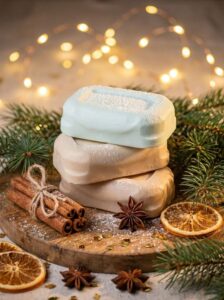
We make both, and people ask us to pick a favorite almost every day. Honestly? They’re two different pleasures. Here’s how to work out which one is yours — though plenty of our regulars just keep both in the house.
Olive oil soap
This is the old one. People around the Mediterranean have been making soap from olive oil for something like a thousand years, and our family’s recipe came over from Greece with them.
It gives you a low, silky lather rather than big fluffy bubbles, and it feels wonderfully mild — the gentlest bar we make, and the one with the shortest ingredient list. We use extra-virgin olive oil, the kind that would be just as good on your kitchen table.
It’s also the patient one. A regular bar cures for a few weeks; a real olive oil bar wants months on the rack before it’s ready. That waiting is most of what you’re buying. A long-cured bar is harder, milder, and lasts far longer in the shower.
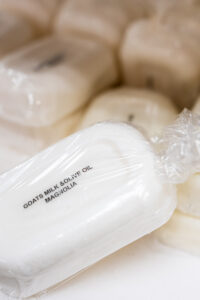
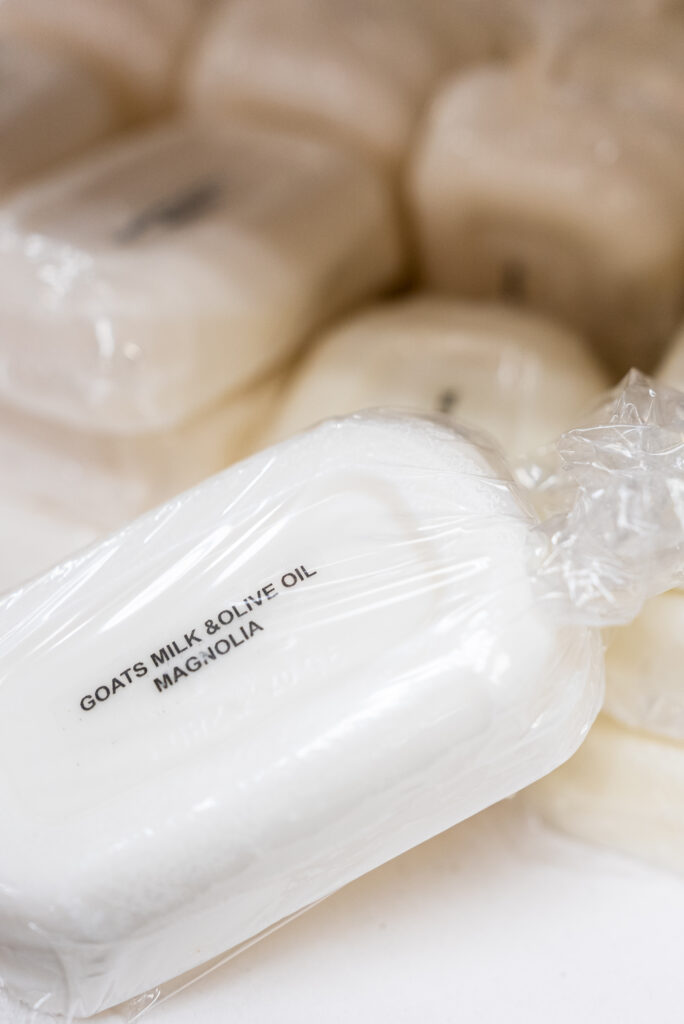
Goat’s milk soap
This is the creamy one, and it’s our best seller by a mile.
Goat’s milk goes in where the water would normally go, and it turns the lather into something soft and dense — closer to whipped cream than to bubbles. It feels cushioned rather than squeaky.
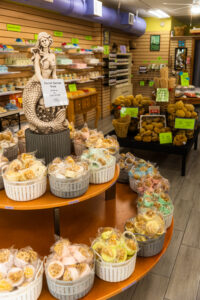
It also carries scent beautifully, which is why nearly all of our forty-plus scents live here. Lavender, lemongrass, oatmeal honey, and seasonal ones like Pumpkin Crunch Cake and Apple Pie.
Side by side
| Olive oil | Goat’s milk | |
|---|---|---|
| Lather | Low, silky | Rich, creamy |
| How it feels | Very mild, slick | Soft and cushioned |
| Scents | A few, plus unscented | Forty-plus |
| Buy it if | You want the simplest, mildest bar there is | You want a creamy lather and a scent you love |
What they both have going for them
- We leave the glycerin in. Making soap creates it naturally, and it’s lovely for skin. The big brands take it out and sell it separately.
- We add a little extra oil so there’s some left in the finished bar. No squeaky feeling.
- We cure them properly, weeks on a rack, which is why they last.
- We make them here, by hand, in our own workshop in Madeira Beach.
So, which one?
- Fussy skin: unscented, either kind. More on that here.
- Very dry skin: olive oil for the mildness, or oatmeal & honey if you want more cushion.
- You want the lather: goat’s milk, every time.
- You want a scent to look forward to: goat’s milk, and come smell all forty.
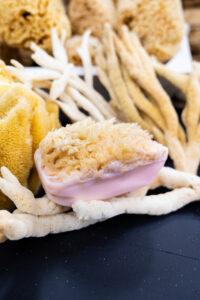
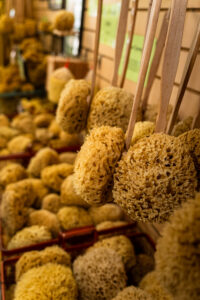
- Buying a gift: a bar and a natural sea sponge together. It’s our most-given pair and it looks far more expensive than it is.
- Truly can’t decide: get one of each. They start at $3.75. Within a week you’ll know which one you keep reaching for.
Make either one last twice as long
Keep it on a soap dish that drains. That’s it — that’s the tip. A bar left sitting in water disappears in a fraction of the time. Pair it with a natural sea sponge instead of a plastic pouf and you’ll get more lather from less soap; our guide to the different sponges will point you to the right one.
Questions we get asked
Is olive oil soap better than goat’s milk soap?
Neither is better — they’re just different. Olive oil is the mildest and simplest, with a silky lather. Goat’s milk is richer and creamier and comes in far more scents.
What is castile soap?
Soap made from olive oil, named after the Castile region of Spain where it was first made. Ours follows our family’s Greek version.
Does handmade soap contain lye?
Every bar of soap ever made does — it’s the reaction that turns oil into soap. In a properly cured bar, none of it remains.
Why does goat’s milk soap cost a bit more?
Milk costs more than water, it has to be kept cold while we work, and the batches are smaller.
How long does a bar last?
A few weeks to a couple of months, and a lot longer on a draining dish.
Do you ship?
Yes, anywhere in the U.S., straight from the shop at John’s Pass.
Try them both
Forty-plus scents, bars from $3.75, made by hand a few miles from where they’re sold.
Shop olive oil soaps · Shop goat’s milk soaps · Come smell all forty in person